








Selecting a robust Illuminated Momentary Push Button Switch is a critical engineering decision for plant engineers and panel builders. Instead of a simple parameter check, component sourcing directly affects system uptime and field diagnostics. When managing high-frequency machinery, heavy-duty switchgears, or CNC systems, standard control switches often face operational failures like contact oxidation or structural loosening from machine vibration. This technical guide analyzes these systemic failure points, outlines configuration standards, and defines a framework to ensure long-term batch uniformity in industrial procurement.
1. Deconstructing the Architecture: Cross-Sectional Failure Analysis
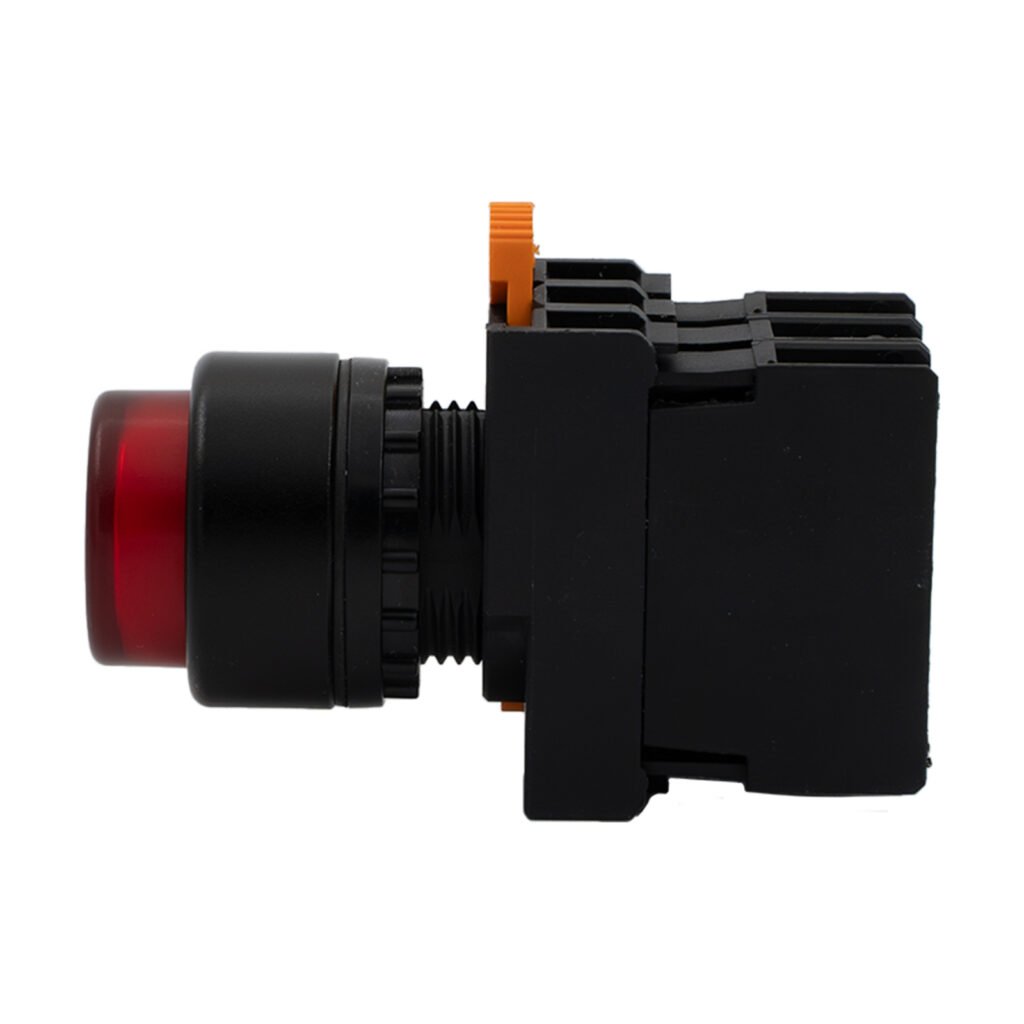
A high-performance Illuminated Momentary Push Button Switch typically utilizes a modular split-body configuration to optimize layout flexibility and reduce wiring benchmarks during factory assembly. The component is generally separated into three or four distinct functional modules: the actuator head, the intermediate mounting base, the LED illumination block, and the electrical contact blocks.
While this modularity accelerates initial panel building, it introduces multiple operational interfaces that must withstand mechanical wear. Standard technical issues often develop within two distinct zones:
Electrical Contact Arcing and Pitting
In low-voltage control circuits, switches manage signal inputs to programmable logic controllers (PLCs) or central relays. When a standard switch closes, tiny gaps create localized electrical arcs before full physical connection is established. Over continuous cycles, these micro-arcs cause electrical pitting and carbon accumulation on the contact matrices. If the contact surface uses inferior alloys, the contact resistance rises sharply, leading to intermittent signal transmission, data packet losses, and unexpected PLC logic trip-outs.
Mechanical Displacement and Vibration Loosening
Heavy-duty industrial environments—such as automatic stamping blocks, automated textile machinery, and high-frequency battery manufacturing lines—generate continuous low-frequency and high-amplitude floor vibrations. Standard panel switches that rely solely on smooth threaded nuts will gradually migrate or rotate within their enclosure cutouts. Once a switch shifts out of its original alignment, internal wiring terminals experience structural stress, which often results in loose screw connections, broken terminal wires, and hazardous open circuits behind the panel wall.
2. Solving Interface Issues: Core Engineering Parameters
To mitigate these systemic vulnerabilities, control panel builders and procurement managers must look beyond superficial pricing and evaluate the underlying engineering configuration of the Illuminated Momentary Push Button Switch.
High-Purity Silver-Plated Contact Matrix
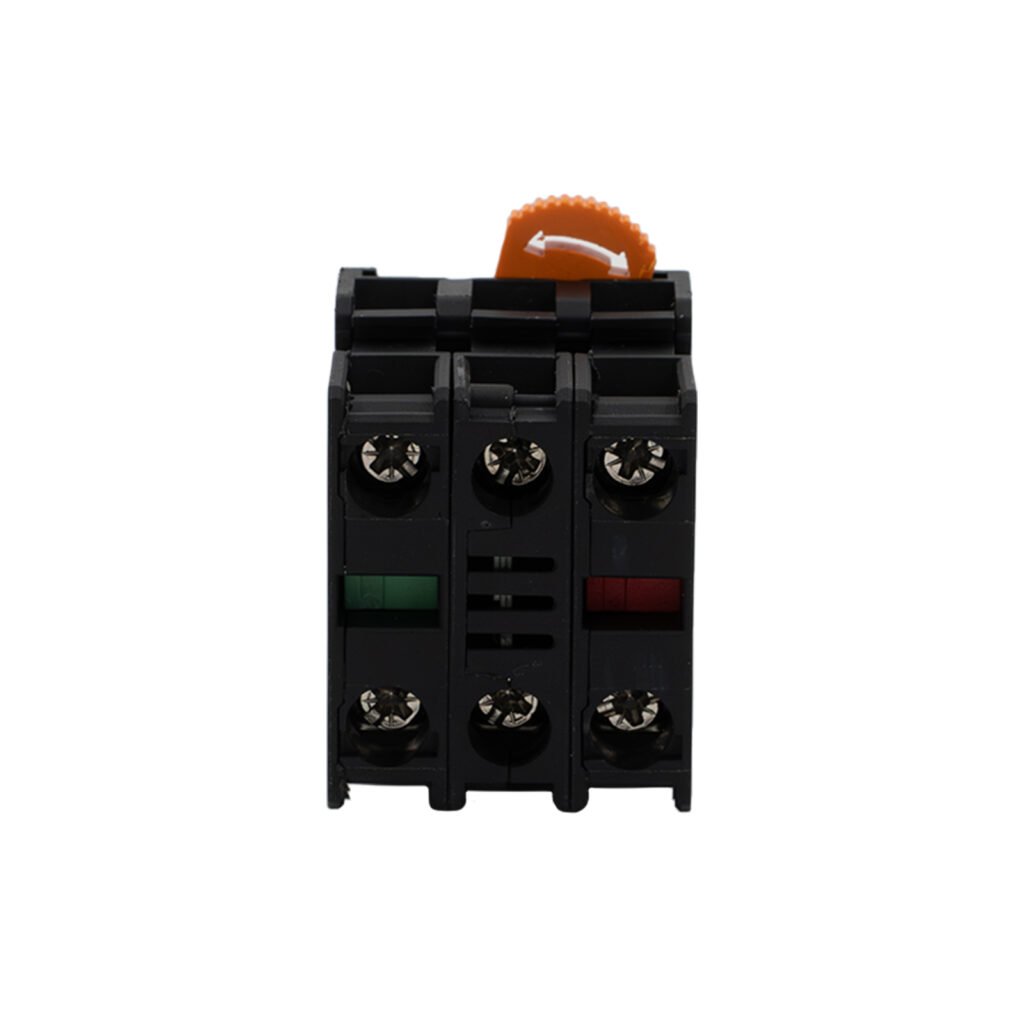
To resolve contact pitting and maintain signal integrity in low-current or low-voltage systems, the electrical contacts must feature high-purity silver-plated surfaces. Silver combines minimal contact resistance with excellent thermal conductivity, preventing thermal loading even under continuous manual operation. Furthermore, premium modular switches incorporate a self-cleaning mechanical scraping action during every press sequence, effectively wiping away microscopic debris or oxidation films to ensure predictable, long-term circuit closure.
Integrated Anti-Rotation Mechanical Alignment
To secure components against permanent machine vibration, the actuator head must feature an integrated mechanical centering tab or anti-rotation boss. This physical tab locks directly into a matching notch in the enclosure panel cutout. By mechanically anchoring the switch profile into the metal or polycarbonate substrate, the unit cannot shift, spin, or loosen under heavy operation, thereby safeguarding the integrity of the rear terminal configurations.
Ingress Protection (IP65 vs. IP66) and Thermal Tolerances
Industrial control interfaces are frequently exposed to harsh processing environments, including oil mist, conductive metal dust, or direct liquid washdowns. Industrial-grade control switches must meet a minimum rating of IP65 dust and water isolation, utilizing heavy-duty internal rubber gaskets to block airborne contaminants from entering the electrical contact block. Furthermore, the operational temperature threshold must remain broad—typically from -25°C to +70°C—to prevent the mechanical reset springs and polymer housings from becoming brittle in cold climates or warping under ambient cabinet heat.
3. Circuit Mapping and Visual Signaling Configuration
Proper circuit configuration ensures the control panel provides intuitive status updates. When deploying an Illuminated Momentary Push Button Switch, engineers must decide between single-circuit and dual-circuit logic, usually centered on standard 1NO (Normally Open) or 1NO1NC (Normally Open + Normally Closed) configurations.
| Contact Type | Primary Mechanical Application | Visual Signaling Integration |
| 1NO (Normally Open) | Basic system initialization, manual motor starting, signal pulsing. | The LED illumination module can be wired to light up only when pressed, confirming contact closure. |
| 1NO1NC (Dual-Circuit) | Dual-state machine logic, emergency sequence indexing, interlocking. | The LED remains constantly illuminated to signal “Ready” status, switching instantly to provide a visual fault alert when the circuit toggles. |
The integration of the AC/DC 24V LED module provides instant optical diagnosis. Rather than forcing operators to inspect physical gauges or external monitor screens, the integrated light element provides distinct signaling profiles across standard industrial colors (Red, Green, Yellow, Blue, White). For long-term installation stability, look for solid-state LED modules with an engineered lifespan threshold of 50,000 hours, minimizing late-night maintenance calls and reducing overhead part replacements for the end user.
4. B2B Procurement Strategy: The Value of Manufacturing Consistency
For global industrial equipment distributors, high-volume electrical wholesalers, and large-scale panel building factories, finding the correct technical parameters is only half the battle. The final challenge lies in finding a supply chain partner capable of ensuring long-term batch uniformity.
When a B2B procurement division deals with an established, direct-to-factory manufacturer, they eliminate the margin inflation and communication lag associated with trading companies. A specialized production plant with decades of technical experience provides clear advantages:
Strict Batch Uniformity: Advanced plastic injection molds and automated assembly lines mean that the 10,000th switch delivers the exact same tactile actuation pressure, insertion depth, and LED luminosity as the first unit off the line.
Direct Component Customization: Source factories can modify illumination voltage limits, configure specialized contact arrays, or implement custom laser-etched symbols directly onto the actuator face during manufacturing.
Full Industrial Compliance: Direct source components maintain formal compliance standards, such as IEC60947-5-1, GB14048.5, and verified CE and CCC certifications, which are required for international switchgear distribution and heavy project approval.
By prioritizing source factories that focus on clean engineering, precise manufacturing, and rigid quality control schemas, global B2B buyers protect their reputation, lower field failure rates, and build a reliable component infrastructure that stands up to the most demanding industrial deployment.
As a bulk industrial electrical supplier, ACXION delivers the 1NO1NC Illuminated Momentary Raised Head Push Button Switch, AC/DC 24V with low MOQ factory direct pricing to optimize your procurement costs.