








Industrial automation discussions tend to fixate on high-end PLCs, variable frequency drives, and complex IoT frameworks. Yet, the final physical barrier between an operator and a high-voltage hazard is much simpler. It comes down to heavily over-engineered, basic hardware.
Good control panel design is essentially an exercise in predicting human error. Standard toggle switches simply won’t cut it for restricted operations like emergency overrides, maintenance toggling, or isolating high voltage—they are too easy to flip by accident. These critical systems demand restricted access via physical keys, requiring a conscious, deliberate mechanical motion from the operator. However, not all key switches deliver the same field reliability; the actual mechanical configuration dictates whether a switch prevents disaster or causes one.
The Ergonomics of a 45° Turn
A switch’s physical setup directly dictates operator behavior. For instance, forcing a right-side-only rotation immediately eliminates accidental, blind-side activation. This is exactly where components like the 1NO1NC two-position right-momentary 45° key selector switch become essential.
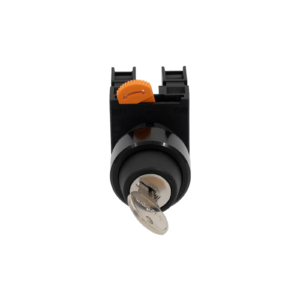
Why 45 degrees? This specific rotational stroke hits the sweet spot. It requires enough deliberate wrist torque to prevent accidental bumps from tool belts, yet won’t cause wrist strain during long maintenance shifts. Pairing this with a “momentary” (spring-return) mechanism adds a vital safety layer. The circuit stays toggled only while the technician actively holds the key against the spring. Let go, and the mechanism instantly snaps back to its default, safe state.
Where Momentary Key Switches Prove Essential
This specific 1NO1NC (One Normally Open, One Normally Closed) momentary configuration is indispensable for “deadman” style control layouts.
- Elevator Maintenance ControlsTechnicians inspecting shafts or testing cab limits routinely need to “inch” the elevator forward. A maintained (latching) switch is dangerous here—if the technician trips or gets distracted, the motor keeps running. A momentary key switch guarantees that motion stops the millisecond hands leave the key. Plus, the 1NO1NC configuration lets them switch between two separate inspection circuits using one single, secured barrel.
- EV Charging Station Emergency ProtocolsModern EV fast-chargers route massive power loads. When a fault occurs, resetting the system cannot be left to chance. A keyed, momentary switch ensures only authorized, tool-carrying personnel can trigger a reset sequence. The key itself serves as a basic, physical audit trail—you cannot change the system state without possessing the physical tool.
Beyond the Specs: Material Science on the Factory Floor
For panel builders, picking the right component goes way beyond matching electrical ratings. Momentary switching inherently causes arcing inside the contact blocks. Over thousands of cycles, this burns out standard contacts. That is why premium switches use silver-alloy contacts to prevent severe pitting and voltage drops.
Beyond electronics, the physical housing matters just as much. The bezel and key barrel must withstand aggressive industrial coolants, heavy dust, and the inevitable impact of a stray wrench.
Ultimately, robust panel design boils down to removing variables. By mandating explicit mechanical actions—like a 45-degree momentary turn—you aren’t just sourcing hardware. You are installing a physical fail-safe against unpredictable human behavior on the shop floor.