








Choosing a three-position selector switch is not just about finding a switch with three positions. The switch also needs to match the way the equipment is controlled.
For example, one application may use the three positions for Manual / Off / Automatic control, while another may need Local / Off / Remote selection. The required contact arrangement, switching method, mounting size, and working environment can also be different.
For this reason, it is important to check the actual requirements of the control system before selecting a switch. This article looks at the main points that buyers, engineers, and equipment manufacturers should consider.
1. Start With the Function of Each Position
Before choosing a switch, first decide what each position needs to do.
A three-position selector switch can be used for many different control arrangements. The same type of switch may be used in a pump control panel, an industrial machine, or an automation system, but the function of each position can be completely different.
Manual / Off / Automatic
This is one of the most common arrangements for equipment control.
The three positions may be used as:
- Manual – the operator controls the equipment directly
- Off – the equipment is stopped or the control function is disabled
- Automatic – the equipment is controlled by a PLC, sensor, timer, or other automatic control system
This type of arrangement is often found in pump systems, HVAC equipment, ventilation systems, and industrial machinery.
Local / Off / Remote
A Local / Off / Remote arrangement is useful when equipment can be controlled from more than one location.
For example:
- Local – control from the local panel
- Off – equipment control is disabled
- Remote – control comes from another panel or control system
This type of control is common in industrial automation, water treatment equipment, motor control panels, and production systems.
Forward / Off / Reverse
Some equipment uses three positions to control the operating direction of a motor.
The positions may be:
- Forward
- Off
- Reverse
However, the control circuit must be designed correctly to prevent conflicting signals from being sent to the motor control system.
Three Different Operating Modes
A machine may also need three different operating modes, such as:
- Production
- Setup
- Maintenance
In this situation, a three-position selector switch allows the operator or maintenance personnel to select the required mode.
The first step in choosing a switch is therefore to define the function of each position. The number of positions alone is not enough to determine whether a particular switch is suitable.
2. Check the Contact Configuration
The contact configuration is one of the most important specifications to check.
Common configurations include:
- 1NO
- 1NC
- 1NO1NC
- 2NO
- 2NC
The abbreviations refer to the type of electrical contacts:
- NO (Normally Open): The circuit is open in the normal state and closes when the contact is activated.
- NC (Normally Closed): The circuit is closed in the normal state and opens when the contact is activated.
A 1NO1NC configuration provides one normally open contact and one normally closed contact. This allows one selector switch to provide two different switching signals within a control circuit.
For example, one contact may be used to send a control signal while the other changes the status of an indicator or another part of the control circuit.
When selecting a three-position selector switch, always check the contact diagram and confirm that the contact operation matches the actual wiring requirements.
3. Decide Between Maintained and Momentary Operation
The switch should also match the way the operator needs to use it.
Maintained Selector Switch
A maintained selector switch stays in the selected position after the operator releases it.
For example:
Position 1 → stays in Position 1
Position 2 → stays in Position 2
Position 3 → stays in Position 3
This makes a maintained selector switch suitable for selecting an operating mode.
Typical applications include:
- Manual / Off / Automatic selection
- Local / Off / Remote control
- Machine mode selection
- Maintenance mode selection
Momentary Selector Switch
A momentary selector switch returns to another position after the operator releases it.
This type of operation is more suitable for temporary control commands, such as:
- Start
- Stop
- Reset
- Jog
If the selected mode needs to remain active without the operator continuously holding the switch, a maintained selector switch is usually the more appropriate choice.
4. Consider Whether a Key Selector Switch Is Needed
In some applications, the main concern is not only the switching function but also who can operate the switch.
A standard rotary selector switch can usually be operated by anyone who has access to the control panel. A key selector switch adds a physical access restriction because the switch is operated with a key.
This can be useful for:
- Maintenance mode selection
- Manual / Automatic control
- Local / Remote operation
- Industrial machinery
- Control panels with restricted access
For example, a machine may allow only authorized maintenance personnel to select a special maintenance mode. A key-operated selector switch can help prevent other operators from changing this setting accidentally.
If access control is not required, a standard rotary selector switch may be sufficient.
5. Check the Switching Positions and Operating Angle
Three-position selector switches are available with different operating arrangements.
Common arrangements include:
- Left / Center / Right
- 0° / 45° / 90°
- Other customized switching angles
The position arrangement should match the design of the control panel and the way the equipment is operated.
For example:
Left → Manual
Center → Off
Right → Automatic
Before ordering a switch, check:
- The number of positions
- The angle between positions
- The direction of rotation
- Whether the positions are maintained
- Whether the key can be removed in specific positions
These details can affect both the operator’s experience and the way the switch is integrated into the control system.
6. Check the Electrical Rating
The selector switch must be suitable for the electrical circuit in which it will be installed.
Important specifications may include:
- Rated voltage
- Rated current
- AC or DC application
- Electrical life
- Contact material
- Contact resistance
A selector switch used for a low-current control signal may have different requirements from a switch used to control a higher electrical load.
In many industrial applications, a selector switch is used to control a relay, contactor, PLC input, or other control component rather than directly switching a large motor.
For this reason, the electrical rating should be checked against the actual circuit requirements before selecting the switch.
7. Consider Mechanical Life and Electrical Life
The expected operating frequency is another factor to consider.
A selector switch used several times a day may have different requirements from one used continuously in a production environment.
Mechanical Life
Mechanical life refers to the number of operating cycles the switch can complete mechanically.
Electrical Life
Electrical life refers to the number of switching operations under a specified electrical load.
These two figures are not always the same.
For example, a switch may have a high mechanical life but a lower electrical life when operating under a particular load.
If the switch will be used frequently, check both specifications to make sure the expected service life is suitable for the application.
8. Check the Mounting and Connection Method
The switch must also fit the control panel properly.
Before ordering, check:
- Panel cutout size
- Mounting depth
- Required panel thickness
- Terminal arrangement
- Connection method
A selector switch may have the correct electrical specifications but still be unsuitable if its physical dimensions do not match the panel.
Screw terminals are commonly used in industrial control applications because they provide a practical connection method for installation and maintenance.
The complete mechanical drawing should be checked before finalizing the switch selection.
9. Consider the Installation Environment
The working environment can affect the type of selector switch required.
Think about where the switch will be installed:
- Inside a clean control cabinet
- On factory machinery
- In a dusty production area
- In a humid environment
- Outdoors
- In an area exposed to vibration
Depending on the application, you may need to consider:
- IP protection
- Operating temperature
- Material
- Corrosion resistance
- Mechanical strength
A selector switch installed inside a protected control cabinet may not need the same level of environmental protection as one installed directly on exposed industrial equipment.
10. Compare the Selector Switch With the Application
The right switch depends on the actual control requirements.
| Application | Common Choice |
|---|---|
| Manual / Off / Automatic | Three-position maintained selector |
| Local / Off / Remote | Three-position maintained selector |
| Maintenance mode selection | Key selector switch |
| Restricted access control | Key-operated selector |
| Temporary control command | Momentary selector |
| Three operating modes | Maintained three-position selector |
This is why choosing a selector switch based only on its appearance or the number of positions can lead to problems. The operating method, contact configuration, electrical rating, and installation requirements also need to be checked.
Three-Position Selector Switch vs. Key Selector Switch
A standard rotary selector switch is suitable when operators need regular access to the selected operating modes.
A key selector switch is more suitable when changing the selected mode should be limited to authorized personnel.
| Requirement | Suitable Type |
|---|---|
| General operator mode selection | Standard rotary selector |
| Restricted access | Key selector switch |
| Maintenance mode control | Key selector switch |
| Manual / Off / Automatic | Maintained selector |
| Temporary control command | Momentary selector |
A key-operated version can be useful when an accidental change of the operating mode could affect equipment operation or maintenance work.
When Should You Choose a 1NO1NC Three-Position Key Selector Switch?
A 1NO1NC three-position key selector switch may be suitable when an application requires:
- Three maintained operating positions
- Key-controlled access
- One normally open contact
- One normally closed contact
- A compact panel-mounted design
- Reliable operation in an industrial control system
For example, this type of switch can be used for mode selection in industrial equipment where the operator needs to select between different control states while access to the switch should be restricted.
The exact contact operation should always be checked against the wiring diagram and the requirements of the control system.
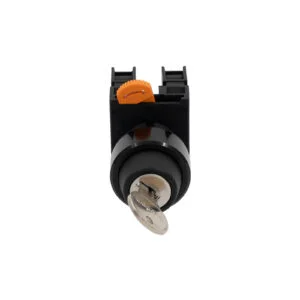
For applications requiring a three-position key-operated switch with a 1NO1NC contact configuration, the ACXION 1NO1NC Three-Position Double-Latching Key Selector Switch is one option to consider.
Three-Position Selector Switch Selection Checklist
Before ordering a three-position selector switch, check the following points:
- What does each of the three positions control?
- Is the switch maintained or momentary?
- Is key access required?
- What contact configuration is needed?
- What voltage and current will the switch handle?
- Is the switch suitable for AC, DC, or both?
- What panel cutout size is required?
- Are the terminal connections suitable?
- Is the environmental protection sufficient?
- Are the mechanical and electrical life ratings suitable?
Choosing a three-position selector switch requires more than simply matching the number of positions. The switch should also match the control function, contact configuration, operating method, mounting requirements, and working environment.
For manufacturers, distributors, and industrial equipment builders, checking these details before purchasing can help reduce wiring changes, installation problems, and future replacement issues.
A suitable selector switch should not only fit the panel. It should also provide the switching function and operating method required by the complete control system.
Featured ACXION Key Selector Switches for Your Project
If you are looking for reliable 1NO1NC key-operated switches for restricted panel control, check out these two typical solutions based on your operation requirements:
- For Double-Latching / Maintained Applications (e.g., Manual / Off / Auto mode selection): 1NO1NC Three-Position Double Latching Key Selector Switch – Stays in position to maintain selected operating modes securely.
- For Momentary / Spring-Return Applications (e.g., Temporary pulse commands or safety reset): 1NO1NC Two-Position Right-Momentary 45° Key Selector Switch – Springs back automatically after release for temporary control logic.