



When wiring up pushbuttons, selector handles, or emergency operators on control doors, electrical installers rely on small snap-on contact blocks behind the front face to handle actual line switching. Among these components, the Normally Open (1NO) module and Normally Closed (1NC) module perform basic circuit control. Choosing between them—or deciding when to pair them together—comes down to your required electrical logic, physical wiring setup, and safety protocols.
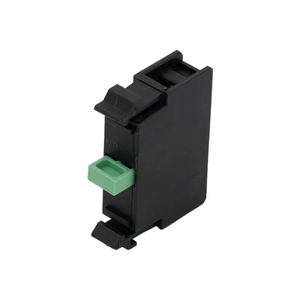
While both module types clip onto standard panel mounting frames, mixing up their functional roles can lead to bad logic feedback, broken interlocks, or unsafe machine behavior.
Understanding Basic Circuit Logic and Contacts
A Normally Open (1NO) contact block sits in an open state when no one is touching the actuator. Electric current cannot cross the internal contacts until an operator presses a button or turns a selector handle. Once released, internal return springs push the contacts apart again, breaking the circuit loop. Because of this behavior, 1NO blocks handle standard start routines, manual jog commands, and auxiliary input signals.
A Normally Closed (1NC) contact block does the exact opposite. In its rested state, current flows freely through the internal silver contacts. Pushing the front actuator forces the internal bridge open, stopping power flow across the connected wire. This default-closed layout makes 1NC blocks mandatory for emergency stop buttons, stop commands, and safety limit loops where breaking power quickly stops machine motion.
Technical & Physical Specs
- Terminal Construction: Built with finger-safe IP20 screw terminal covers to protect panel builders from accidental live wire touches during testing.
- Internal Contact Material: Fitted with self-cleaning silver alloy contact points that clear light surface oxidation during routine mechanical switching.
- Modular Assembly: Designed for tool-free, snap-on mounting that lets technicians stack multiple NO and NC blocks onto one operator frame.
- Electrical Life Rating: Built with fatigue-resistant internal springs to handle over 1,000,000 mechanical operations under rated industrial loads.
Practical Applications on the Factory Floor
In standard motor starter circuits, pressing a green start button closes a 1NO contact block. This sends a quick pulse to an indicator coil or holding relay, pulling the main contactor in to run the motor. Because the 1NO contact only passes current during actuation, control logic depends on holding circuits or PLC inputs to keep machines running after the operator lets go of the button.
Emergency stop circuits work under strict fail-safe rules. Using a 1NC contact block ensures that if a signal wire snaps or drops loose behind the door, the circuit opens automatically and stops the system. If an engineer accidentally wired an emergency stop with a 1NO module instead, a cut wire would leave the system completely unable to trip during an actual emergency.
Many panel layouts call for combining 1NO and 1NC modules on a single selector switch or dual-touch button. For example, turning a selector handle to run a pump might close a 1NO contact to fire the motor drive while opening a 1NC contact to kill a standby status lamp. This dual-block setup simplifies back-panel wiring by letting one switch change two separate circuit paths at the same time.
Back-Panel Installation and Maintenance Tips
Installing contact blocks requires watching space behind the control door, especially when stacking multiple modules deep. Modern 1NO and 1NC blocks use modular snap-on housings that lock onto central mounting collars. This layout lets wire technicians snap extra blocks into place without unmounting the main selector head from the front door. During routine panel service, check screw terminal tightness on heavy-vibration machinery like stamping presses or conveyor drives. Thermal cycling and plant vibration can back off terminal screws over time, causing high resistance or floating signal faults. Choosing modular contact blocks with captive pressure plates keeps control wires clamped down tight, cutting down field maintenance time.