








When buying an industrial push button switch, industrial buyers consider visible specifications, such as contact configuration and illumination options. But what buyers can’t see is what will affect long-term reliability. Industrial end users operate in demanding environments where component failure is not an option. So, long-term reliability cannot be determined by visible specifications. As with other industrial components, reliability is determined long before the switch is installed on a machine. Reliability is determined in the details: How are the switches designed, manufactured, tested and controlled?
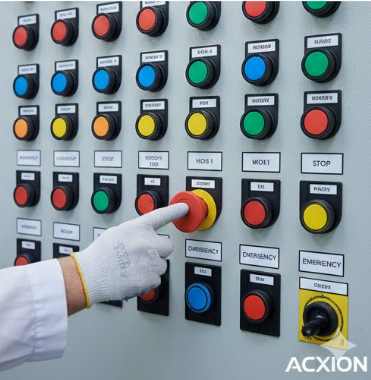
This article considers industrial push button switches from the reliability and production stance. This is the approach that matters most to OEMs, system integrators, and distributors of industrial equipment globally
Reliability Is a Manufacturing Result, Not a Product Feature
A push button switch in an industrial application is expected to perform seamlessly and continuously through repetitious mechanical stress and electrical load, as well as exposure to different vibrations and environments. Failures are more common with exposure to extreme environments, not as a result of user error. Unlike limited weaknesses in an internal structure, material selection, or insufficient production testing, weaknesses in production, testing, and the understanding of usage environment are the most common causes of failure to the switches.
More than one design choice is required to create an industrial push button switch that is the result of multiple controlled processes.
Material Selection Has Direct Impact on Industrial Performance
The degradation of materials is one of the most common field failure mechanisms for industrial push button switches. The contact materials with insufficient thermal conductivity or poor surface treatments can cause signal destabilization or increased resistance over time. Also, low-grade plastic housings can warp and/or permanently deform with thermal cycling and/or repetitive mechanical stresses.
Industrial grade push button switches are usually designed and constructed on the basis of:
– Copper and/or silver contact alloys for good and stable conductivity
– Flame-retardant housing materials
– Wear-resilient actuator components
– Sealed structures for dust and moisture resistance
These characteristics can rarely be seen from the outside, however, they majorly control how long the switch will operate.
Assembly Precision Affects Long-Term Stability
The switch is deemed reliable with the good materials described above, however, manufacturing variation can still be significant. The uneven alignment of the internal components can cause deployment of uneven mechanical force, and consequently, can lead to accelerated mechanical wear or poor feedback.
Industrial manufacturers take great care of:
– Actuator alignment tolerance
– Spring positioning consistency
– Contact pressure balance
– Terminal fastening strength
It gives the end users an opportunity to ensure that a button, when pressed, will respond mechanically the same way for a very long time (thousands of actuations).
Why Industrial Push Button Switches Require Dedicated Testing
One of the last things anyone thinks of when assessing the purchasing of industrial push button switches is the testing of the switches. Testing switches is not a simple procedure. Hit and run functional testing will show that the switches work. This will not tell the purchaser how a switch will respond and perform over a length of time.
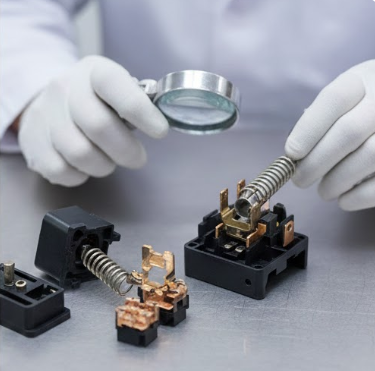
Some of the more reputable sellers of industrial push button switches will have.
– Multiple cycles of mechanical testing
– Electrical continuity verification
– Contact resistance monitoring
– Torque and rebound force checks
– Environmental simulation under temperature and humidity variation
These tests mimic the working situations of industrial control panels switches of various machines and in electrical energy panels and devices. Without these tests, the switches are more likely to malfunction sooner and will have a high failure rate in the field.
Consistency Matters More Than Individual Performance
For industrial buyers, consistency across a production batch is often more important than the performance of an individual switch. When a batch of industrial push button switches is to be used in mass produced equipment, they need to perform the same and have the same behavior in each of the thousands of switches in the batch.
As a result, they tend to work with suppliers that have individual control of their production, and don’t work with outsourcing of different production steps. Stable manufacturing equipment, consistent production of the assembly steps, and control of the circuit testing of the electrical components will minimize the differences that can occur between production batches.
Industrial Applications Demand Predictable Operation
The work environment in an industry is such that a push button switch is not just a decorative piece. It has an important operational function. Industrial push button switches are used on automated machinery, on energy control systems, and in control cabinets. When such switches function in an erratic manner, they create safety, and operational and maintenance issues.
Benefits of Reliable Industrial Push Button Switches
– Reduced machine downtime
– Lower maintenance frequency
– Improved operator confidence
– Stable system response under repetitive use
Having such switches on machinery and energy control systems, and offering the above benefits, is only possible when the switches perform reliably, and such reliable performance must be an outcome of the switches being properly designed, manufactured and assembled.
Why Industrial Buyers Evaluate the Factory, Not Just the Product
Savvy buyers know that evaluating an industrial push-button switch also means evaluating the factory that produces it. They will take a factory tour and will be inspecting the factory more than they will be inspecting the product. They will be looking for:
– In-house testing equipment
– Documented quality control procedures
– Stable production workflows
– Engineering support for application-specific requirements
Such buyers know that the industrial push-button switch they receive today will be of the same quality when they place repeat orders in the future.
About ACXION
ACXION manufactures industrial push button switches and control components for OEMs and industrial buyers worldwide. Through controlled manufacturing processes, internal testing, and quality management, ACXION supports reliable operation in automation systems, power equipment, elevators, and industrial control panels.
Learn more: https://www.acxionelectric.com/