



Industrial control cabinets sitting out on active factory floors deal with vastly different physical working conditions. A selector switch head mounted on an outdoor battery energy storage container has to survive UV degradation, seasonal freezing cycles, and fine windblown sand. Put that exact same physical switch inside a fast-paced auto stamping line, and it takes thousands of violent, glove-handed turns from machine operators every single week. Matching the right front-panel actuators and back-panel contact blocks from acxionelectric.com to real-world plant stress stops minor component failures from shutting down main production lines.
Getting control hardware selection right isn’t just about picking nice-looking handles for enclosure doors. It comes down to how a switch feels through work gloves, how the internal metal contacts hold up against ambient shop-floor moisture, and whether an operator can instantly spot a machine’s state across a noisy bay.
Automated Manufacturing and Heavy Machinery
Inside automotive body shops, robotic welding cells, and high-speed packaging plants, machines run flat-out across multiple daily shifts. Floor workers constantly flip between full-speed Automatic run modes and low-speed Manual setup routines to clear material jams, tweak feed guides, or realign photoelectric sensors.
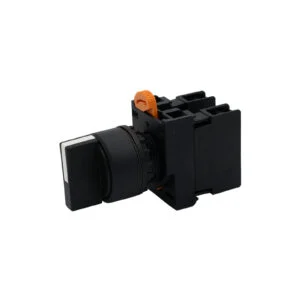
For these high-cycle doors, panel builders install ACXION two-position latching illuminated selector heads paired with stackable 1NO contact blocks. The internal mechanical detents snap into place with a sharp physical click that an operator can feel through heavy leather gloves. Built-in LED lights illuminate the entire operator ring, so supervisors walking down main plant aisles can verify machine modes at a glance without walking right up to the enclosure. Inside the housing, heavy-duty return springs and machined latching cams keep the switch mechanism cycling smoothly across a rated 1,000,000-operation lifespan.
Behind the panel face, back-cabinet wiring space gets tight fast. Instead of pulling the entire selector assembly off the front door when modifying control circuits, electricians just snap extra contact modules directly onto the central mounting collar. This modular setup cuts assembly time on new panel builds and keeps field retrofits straightforward when engineers need to pull extra signal loops into the local PLC.
Water Treatment and Chemical Processing Skids
Municipal dosing skids, industrial water treatment plants, and chemical mixing skids often place operator interface boxes out in humid, semi-open plant bays. These skids run automated pumps, agitators, and chemical injection valves where an accidental bump or an unauthorized turn of a knob can dump too much chemical into a batch or trip environmental compliance limits.
To secure these panel faces, plant engineers use ACXION key selector switch heads built with internal rubber lip seals that hit standard IP65 dust and fluid ingress ratings (with IP66 options available for heavy washdown spots). The physical key cylinder stops unassigned personnel from messing with pump parameters or overriding automated dosing sequences. Behind the stainless steel door face, ACXION 1NO contact modules use self-cleaning silver alloy pads that lightly scrape away ambient oxidation every time the key turns, making sure 24V DC PLC input signals get through without floating signal errors.
Panel shops building outdoor stainless steel boxes also rely on the anti-rotation chassis tab molded right into the switch collar. The tab locks tight into standard panel knockouts, keeping the main switch body from spinning loose when a technician turns the key hard with cold, wet hands during winter outdoor maintenance.
Battery Energy Storage Systems (BESS) and Power Switchgear
Utility-scale energy storage containers, commercial inverter skids, and high-voltage power switchgear manage massive electrical loads where live switching carries real arc-flash risks. On these high-power enclosures, key removal rules are crucial for keeping lock-out, tag-out (LOTO) safety protocols tight during service calls.
ACXION key selector switches can be ordered with strict key-pull rules so field electricians can only slide the physical key out when the handle is turned fully to the Off or Isolated position. Servicing crews pull the key and carry it in their pocket before opening main enclosure doors, physical proof that nobody outside can accidentally turn main power back on while work is underway. The modular design also keeps the front-door lock head totally separated from interior high-voltage wiring blocks mounted behind the door plate.
Furthermore, heavy-duty pressure plate terminal screws clamp 14-gauge control wires down solid. This prevents terminal connections from backing off loose over years of continuous low-frequency hum and vibration coming from nearby transformer coils and heavy cooling fans.
Industrial HVAC and Commercial Building Automation
Rooftop HVAC units, commercial centrifugal chillers, and large industrial pump panels force a ton of wiring into compact, shallow metal enclosures. Panel shops building these units on tight assembly schedules need standardized modular parts that drop into place fast without special hand tools or fiddly mounting hardware.
The modular architecture across the acxionelectric.com lineup keeps the front-panel operator head completely independent from back-panel contact blocks. Using snap-on mounting frames, panel wiremen clip 1NO, 1NC, or LED power modules onto standard selector handles or pushbuttons in a couple of seconds. This stackable setup keeps back-panel wire runs neat, handles multi-circuit switching without clutter, and lets technicians swap out a damaged contact block down the road without tearing apart the whole front-door assembly.
Standardizing on these modular components across an entire building automation job cuts spare parts inventory way down for facility maintenance teams. Service technicians can stock a single replacement contact block model on their service trucks that fits pushbuttons, two-position selector switches, and emergency stop operators throughout the entire site.