











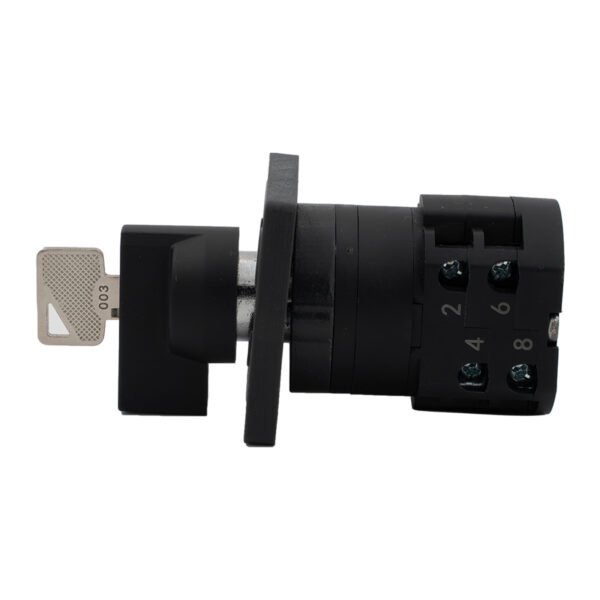
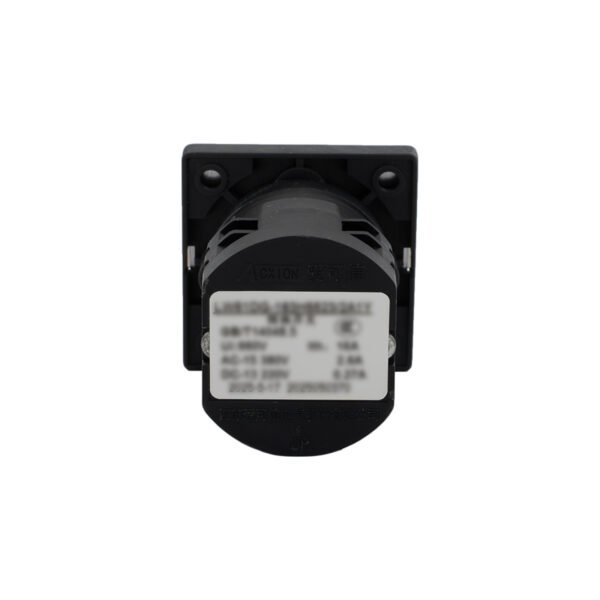
5 Terminal Key Type Cam Switch
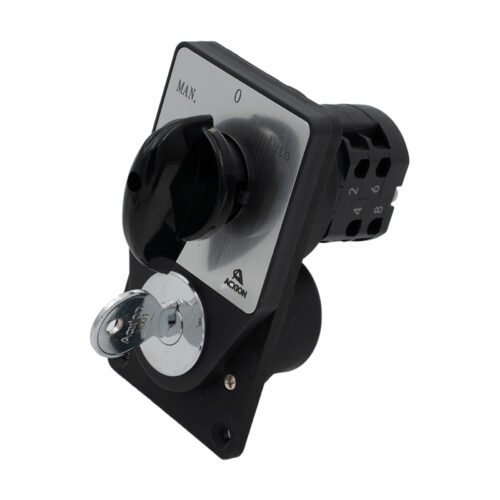
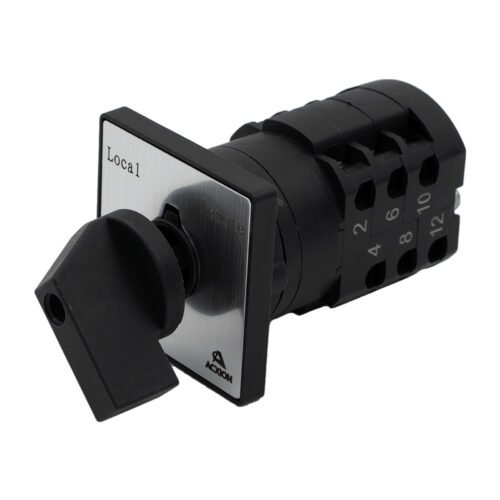
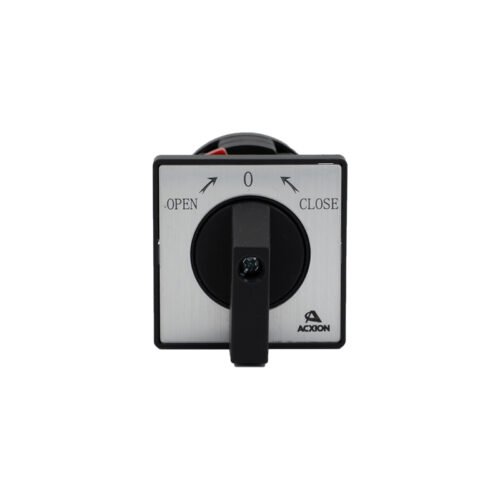
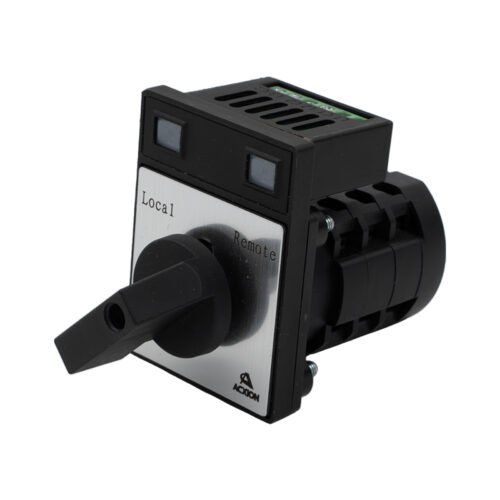
ACXION 5 Terminal Key Type Cam Switch is a key-operated rotary selector with five wiring terminals, designed for control circuits that require more connection points than a standard 3-terminal switch can accommodate. It is commonly specified in switchgear, EV charging infrastructure, and energy storage systems where secure mode selection needs to interface with multiple downstream circuit branches simultaneously. OEM/ODM buyers building panels for these applications will find the 5-terminal layout reduces the need for external junction points and simplifies overall wiring.
Features
5-terminal wiring layout: Provides additional connection points compared to 3-terminal models — suitable for circuits where the switch needs to feed or control multiple branches from a single rotary position
Key-operated access control: Universal or non-universal (one-to-one) key options with up to 100 unique non-universal variants, preventing unauthorized mode changes in sensitive installations
Wide position and section range: Up to 16 positions and 12 sections handle complex multi-circuit selection requirements within a single switch body
Configurable cam profiles: Custom switching sequences available — submit your switching table and we configure the cam profile to match your circuit design
Laser-engraved panel marking: Permanent text in any language; no fading or peeling over the product’s service life
Specifications
Rated Current: Up to 20A
Positions: Up to 16
Sections: Up to 12
Step Angle: Min. 22.5°; standard: 30° / 45° / 60° / 90°
Terminal Type: Y-type and OT-type screw terminals (5-terminal configuration)
Non-Universal Key Variants: Up to 100
Mechanical Life: Up to 1,000,000 cycles
Electrical Life: Customizable up to 1,000,000 cycles
Operating Temperature: -25°C to +55°C
Humidity: ≤95% RH at 25°C (non-condensing)
Standards: IEC 60947-5-1 / GB14048.5
Certifications: CCC, CE
Frequently Asked Questions
Q1: What is the practical difference between a 3-terminal and a 5-terminal key cam switch?
The terminal count determines how many separate conductors can connect directly to the switch body. A 3-terminal switch works well for simple circuits with one common and two switched paths. A 5-terminal switch is needed when the circuit requires more connection points at the switch — for example, when controlling multiple outputs simultaneously from one selector position, or when the wiring design avoids external junction boxes by bringing all conductors directly to the switch terminals. If your switching diagram has more than three conductors at the switch, the 5-terminal version is the appropriate choice.
Q2: What applications is this switch most commonly used in?
Typical uses include EV charging station control panels (mode selection between charging, standby, and fault reset), energy storage system interfaces (grid connection sequence control), industrial switchgear (phase or feeder selection with multiple branch connections), and CNC machine tool cabinets where several circuit paths need to be switched from a single secured selector. The key mechanism ensures that only authorized personnel can change the operating mode in all of these environments.
Q3: How does the non-universal key option work for a multi-site installation?
Non-universal (one-to-one) keys mean each switch unit has its own unique key cut — a key from one panel cannot operate any other switch in the installation. This is useful when different departments, technicians, or access zones need separate key control. We supply up to 100 unique non-universal key variants per order, with each key paired to a specific switch. Contact us if your project requires key numbering or serialization for documentation purposes.
Q4: Can we get a switching diagram before placing a bulk order?
Yes. For standard cam profiles, switching diagrams are available on request before order placement. For custom profiles, we perform an engineering review based on your switching table and provide a diagram for your approval before production begins. This is standard practice for OEM buyers who need to include switch documentation in their panel submission packages.
Reviews
There are no reviews yet.