



A maintenance manager we work with describes his summer like this. The ring-main unit trips on a humid morning, nobody touched it, and by the time he arrives the fault has cleared itself. He re-energises, it holds, and the same thing happens three weeks later. That pattern is condensation in switchgear, and it is one of the few faults that leaves no burnt smell behind.
Scope note: this covers cabinet climate control inside low-voltage switchgear, terminal boxes, ring-main units and compact substations, using the AWS temperature and humidity controller range. Air-conditioned electrical rooms and forced-ventilated outdoor kiosks follow different rules. We build the AWS range, so read the sizing advice with that in mind.
Where the water actually comes from
Water does not need a leak to appear inside a panel. Warm air holds more moisture than cold air, and every enclosure breathes through its cable entries, gaskets and door seals as the internal temperature moves. A cabinet that sits at 40 degrees C in the afternoon and drops to 24 degrees C overnight pulls in humid air on the way down. When a surface inside falls below the dew point of that air, the moisture lands on it.
The dew point is worth calculating once, because it explains the whole problem. At 30 degrees C and 80% relative humidity, the dew point is about 26 degrees C. Any surface at or below 26 degrees C in that air will collect water. A steel enclosure wall in a plant that cools overnight reaches ambient long before the air inside it does, which is exactly why condensation forms on the wall and runs down onto the busbars.
IEC 60068-2-30 is the test standard that reproduces this cycle, and IEC 61439-1 sets the temperature rise limits for the assembly itself. The physical mechanism is the same in a 400 V distribution board and a 33 kV ring-main unit; only the consequence changes.
Why it trips the circuit rather than just looking untidy
Water on an insulating surface does not need to bridge anything to cause a fault. Damp dust on a terminal block drops the surface resistance, leakage current creeps across the creepage distance, and eventually the insulation flashes over. On a 400 V panel this often trips an earth-fault relay before any visible damage appears. On medium voltage equipment the same process produces a flashover with real damage behind it.
The corrosion is slower and more expensive. Terminal screws rust, aluminium busbars oxidise under the contact washer, and hinge pins seize. A panel that sees three humid seasons has a different maintenance profile from one that stays dry.
Heating, sensing and moving the air
Anti-condensation control does three jobs. A controller that only does one of them leaves the problem half solved.
Keep the surfaces warm. A heater inside the cabinet raises the air temperature and, more importantly, keeps the steel and the busbar above the dew point. Our aluminium AJR heaters cover 50 to 300 W in A and B body sizes. The silicone AJR types come in 50 W and 150 W versions with a standard 3 m lead, and they are the flexible option where the space behind the busbar is tight.
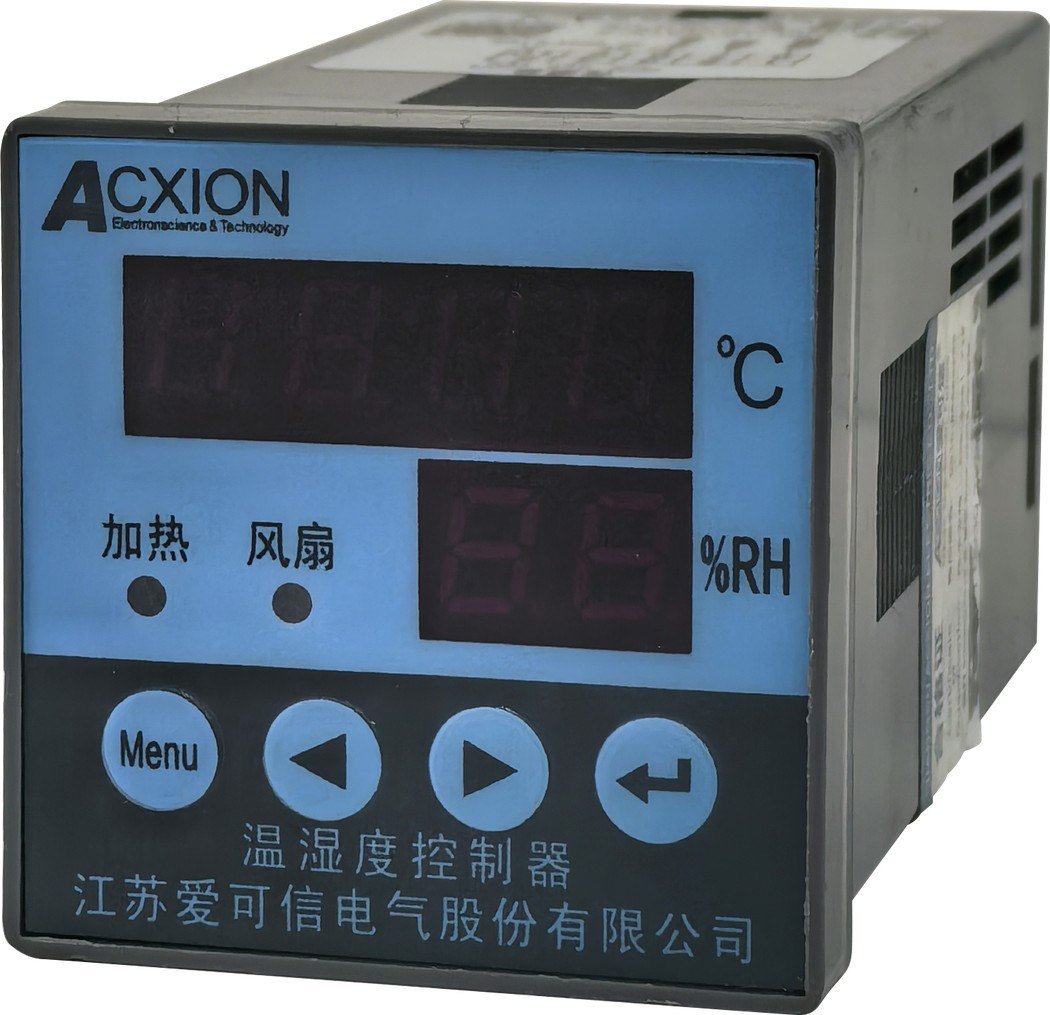
Measure both temperature and humidity. A thermostat alone cannot see moisture. The AWS range measures temperature from -40 to 120 degrees C and relative humidity from 18 to 98% RH on the intelligent types, with temperature accuracy of plus or minus 1 degree C. That humidity channel is what lets the controller decide when heating is really needed instead of running on a fixed schedule.
Move the air. A heater warms the volume next to it. Warm air rises along the cabinet wall, so the top of the enclosure gets hot while the bottom stays at the temperature that started the problem. The AWS intelligent controllers include a fan output, and the fans pull air across the cabinet so the heater’s effect is spread. On tall cubicles, this is the difference between dry terminals at the top and wet terminals at the bottom.
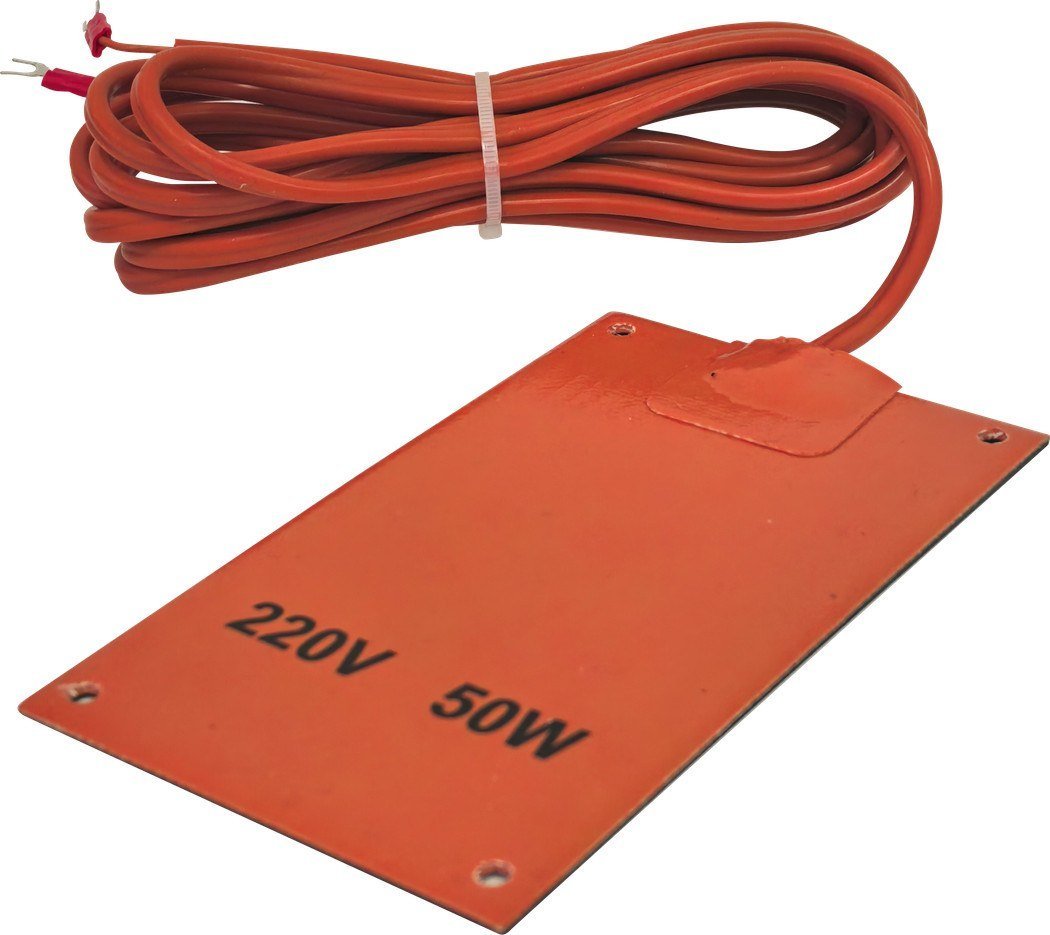
Sizing starts from enclosure volume, and most cabinet builders work to roughly 5 to 10 W per cubic metre of internal volume for anti-condensation duty. That is a working estimate, not a standard, and it does not replace a calculation. As a check on the same arithmetic: a sealed 600 x 800 x 300 mm enclosure has a surface area of about 1.8 square metres. A 50 W silicone pad inside it raises the internal air temperature by roughly 5 K once the door is closed, assuming normal door seals and no insulation. Five kelvin is enough to keep the surfaces clear of a 26 degree dew point in a 25 degree room. In a colder plant or a larger enclosure, the same calculation pushes you toward 150 W or a fan-assisted distribution.
What we no longer recommend
Three patterns have come back enough times that we stopped recommending them.
A heater with no humidity channel. In coastal substations, a plain thermostat runs the heater through the dry season as well, because it only knows temperature. Three panels in one such substation ran that way for a summer. One reached 45 degrees C internally in August, and the secondary wiring insulation hardened to the point of cracking at the bends. The AWS intelligent types read humidity as well, so heating runs when moisture is present rather than whenever the air is cool.
Leaving the fan running continuously. It feels like ventilation, and it does move air, but on a humid day the fan pulls moist outside air into the cabinet. The fan output on an AWS controller should be linked to a setpoint, not wired to run permanently.
Sealing every entry and leaving the trench open. An IP65 enclosure, sealed as defined in IEC 60529, still breathes through the cable conduit. If the cable trench fills with water in the rainy season, sealing the enclosure gaskets changes nothing, because the moisture arrives along the cable. In that case the fix is at the trench, not in the cabinet.
Choosing a controller in the AWS range
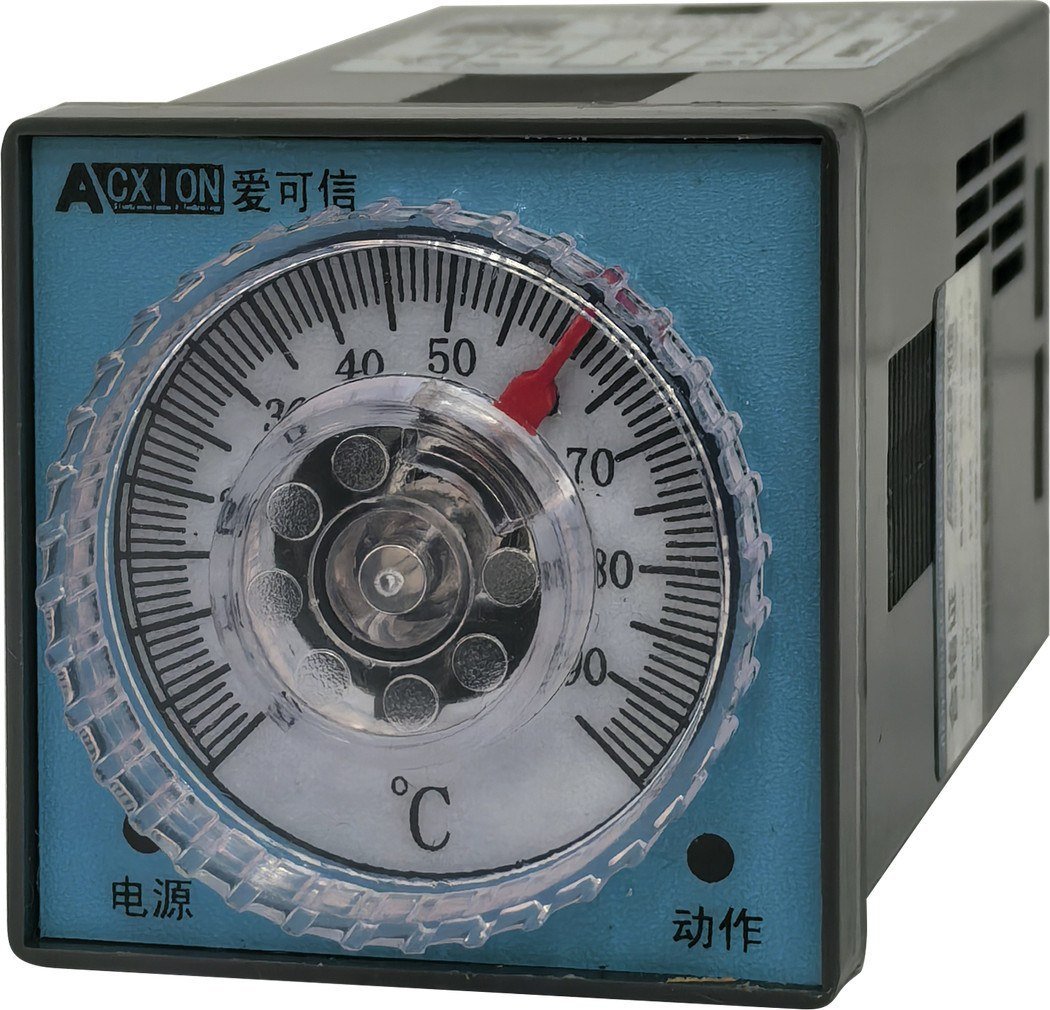
The range splits into dial, basic and intelligent platforms, and the code carries the fields that matter: which channel is monitored, which action the output drives, whether the output is passive or powered, the platform letter, and the mounting format.
| Platform | Setting method | Mounting options | Where it fits |
|---|---|---|---|
| Dial (Z) | Setpoint dial, no display | 35 mm DIN rail, or 45.5 x 45.5 mm panel cut-out | Single-function cabinets, fixed duty |
| Basic (J) | Preset functions, limited adjustment | DIN rail or panel | Simple heater or fan control |
| Intelligent (X) | Digital display, multi-channel | 48 mm DIN rail, 72 / 96 / 120 mm panel, 1P slim DIN, or 115 x 90 x 72 mm housing | Multi-channel cabinets, alarm and 4 to 20 mA outputs, RS485 where needed |
Output contacts are rated 250 VAC / 5 A, which covers most heater and fan loads directly. Intelligent types take 85 to 265 V AC/DC supply, so the same device works on a 110 V DC station battery or a 230 V AC auxiliary supply without a variant change. RS485 is available on selected models, which is what lets the cabinet climate data reach the same Modbus loop as the rest of the panel monitoring.
The sensors are matched to the platform: WCG-Z with the dial types, WCG-J with the basic types, WCG-X with the intelligent types. The lead and connector are specific to the controller, so the sensor should be ordered with the device rather than matched afterwards. Mount the sensor at mid-height on the side that sees the coldest surface, and keep it away from the heater body, or the controller will read a temperature that no other part of the cabinet experiences.
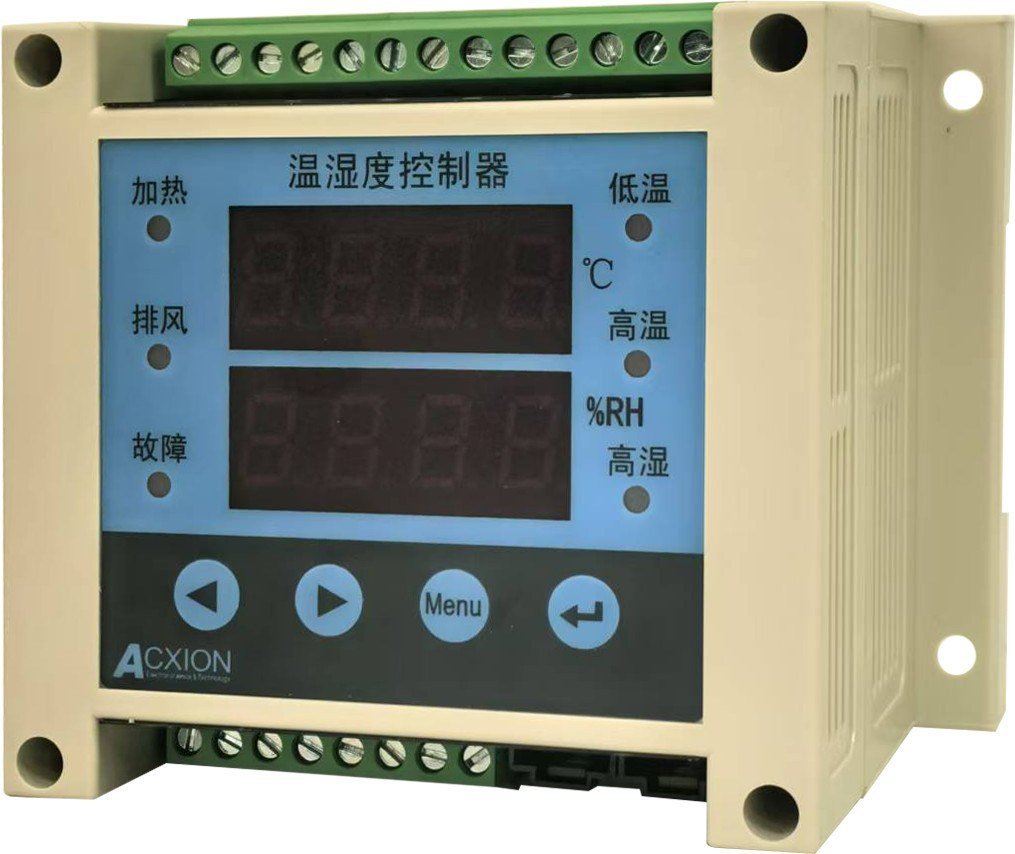
One installation detail for the intelligent types with a 4 to 20 mA output: the alarm and analogue outputs are the two signals most panels actually use. The alarm contact goes to the local annunciator; the analogue output goes to the SCADA loop when a trend of cabinet humidity is more useful than a single threshold.
A practical sequence
Measure first. A full week of cabinet temperature and humidity in the humid season tells you more than an hour on the day of the visit. Size the heater from the volume, then confirm the rise with the 5 to 10 W per cubic metre estimate. Pick the sensor and controller pair from the platform table above. Wire the fan output to a setpoint, and leave the trench as the last thing to check before blaming the enclosure.
The AWS controllers, sensors and heaters are in the power monitoring and protection catalogue on our download centre. For the other half of the same story, hot joints that need watching rather than drying, our notes on control panel troubleshooting cover the symptoms that get confused with condensation, and the ACXION blog collects the installation write-ups. Background on our manufacturing is on about ACXION, and cabinet drawings can go through the contact ACXION page.
Specifications come from the current catalogue and can change as the range is revised. Confirm channel count, output action and mounting format against the order confirmation.
Controllers, sensors and heaters are supplied to the configuration you order, and each one is quoted separately.
One comment
Comments are closed.
[…] not the button. Heaters or a breather usually fix it. A new switch does not. Our earlier piece on sizing anti condensation heating for cabinets works through the numbers if that pattern matches […]