








If you are buying or distributing push button switches right now, you’ve probably noticed the ground shifting a bit under your feet. Raw material spikes, weird ocean shipping routes, and strict customs clearance rules across developing markets have made sourcing a lot different than it was a couple of years ago.
Here’s a breakdown of what’s happening with factory pricing, regional demand, and how smart buyers are adjusting on the ground.
Silver Prices Are Pushing Up Contact Costs
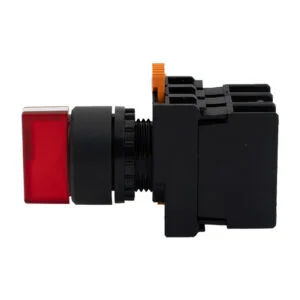
Making a switch that doesn’t weld shut under heavy motor loads requires decent silver on the contact points. With silver market prices swinging wildly over the last few quarters, factories are feeling the squeeze on production costs.
To keep FOB prices from jumping through the roof, manufacturers are getting smarter with contact plating—moving away from solid silver rivets toward silver-nickel (AgNi) clad contacts, usually keeping the silver layer around 0.2mm to 0.3mm thick for standard 10A blocks. Engineering plastics like polycarbonate haven’t fluctuated as much, which helps keep housing costs somewhat stable.
Right now, a basic non-illuminated 22mm button sits somewhere between $0.35 and $0.80 FOB for bulk orders. If you add LED illumination or need a zinc-alloy bezel instead of plastic, expect quotes to land anywhere from $0.80 up to $1.80.
Moving to Component-Level Buying in Southeast Asia
Factory expansion across Vietnam, Thailand, and Indonesia is driving huge demand for basic panel components. But instead of importing fully assembled switches, panel builders in these regions are drastically changing how they manage inventory.
We saw this up close with a customer in Ho Chi Minh City—a mid-sized panel shop supplying local textile mills. They were constantly running into a nightmare where they had boxes of 1NO+1NC buttons sitting on shelves taking up space, but were completely out of stock on 2NO illuminated models for an urgent build.
We worked with them to transition their purchasing over to ACXION’s modular switch system. Instead of ordering fixed, fully assembled units, they started buying bulk bags of ACXION 22mm operator heads, mounting latches, and stackable contact blocks separately.
Now, when a panel job comes in, their guys just snap the exact contact configuration together right on the workbench. By pairing this modular setup with a Form E certificate from ACXION to dodge the 8% import tariff, they cut down their warehouse SKUs by nearly 40% and freed up a ton of cash that used to sit trapped in dead stock. Plus, ACXION’s silver-alloy contacts finally solved a nagging issue they had with contact rust caused by the intense local humidity.
Desert-Ready Gear in MENA and Latin American Shifts
Over in the Middle East and North Africa, the demand is totally different. Huge infrastructure projects in Saudi Arabia and the UAE—like solar farms and desalination plants—mean buyers don’t care about the absolute lowest price. They care about IP66 or IP67 ratings, heavy-duty metal bezels, and screw terminals that won’t vibrate loose under high heat.
Meanwhile, distributors in Mexico, Brazil, and Chile are steadily dropping overpriced European brands in favor of reliable Asian OEM suppliers who can back up their products with clean safety certificates.
A Few Real-World Buying Notes
If you are negotiating contracts for the rest of the year, make sure to clear up silver surcharges upfront. Ask your factory directly whether your quote is locked or tied to a silver price index, so you don’t get surprised with price bumps on reorders.
Also, don’t overlook ocean shipping packaging. High humidity inside shipping containers will turn brand-new terminal screws rusty before the boat even docks. Demand inner moisture bags and sturdy 5-ply cartons. Lastly, customs in places like Vietnam and Indonesia are getting much stricter about border checks, so always ask your supplier for batch test reports showing dielectric strength before the container sails.